
Bible Verse About Bees Attacking
The Bible does not specifically describe bees “attacking” people in a literal detailed story, but it does use bees and swarms as a symbol of overwhelming danger or enemies surrounding someone.
A related verse uses the idea of bees as a comparison for being surrounded:
- “They compassed me about like bees; they are quenched as the fire of thorns.” — Psalm 118:12 (KJV)
This verse uses bees to describe being surrounded by many enemies quickly and intensely.
Bees in the Bible Revelation
Bees are not directly mentioned in Revelation. However, Revelation uses similar symbolic language of swarms, judgment, and intense destruction.
So while bees are not named, the imagery of overwhelming forces is present throughout the book.
How Many Times Are Bees Mentioned in the Bible
Bees are mentioned only a few times in the King James Version—approximately 4 references (depending on translation counting variations). The most notable references are in:
- Deuteronomy
- Judges
- Isaiah
- Psalms
They are mostly used symbolically rather than as detailed biological descriptions.
Spiritual Meaning of Bees in the Bible
In biblical symbolism, bees often represent:
- Hard work and productivity
- Organization and community
- Overwhelming opposition (like swarms of enemies)
- Sweetness and blessing (through honey)
Bees show both blessing and warning, depending on context.
Bible Verses About Bees KJV
Key verses include:
- “And they turned and went up into the hill… and, behold, there was a swarm of bees…” — Judges 14:8 (KJV)
- “They compassed me about like bees.” — Psalm 118:12 (KJV)
- “The bee shall come, and shall settle in them.” — Isaiah 7:18 (KJV)
These verses show bees as both natural and symbolic imagery.
Bible Verses About Bees and Honey
Honey is often associated with blessing, abundance, and God’s provision.
- “And he said unto them, Out of the eater came forth meat, and out of the strong came forth sweetness.” — Judges 14:14 (KJV) (Samson’s riddle referencing honey from bees)
- “Honey and the honeycomb are sweet to thy taste.” — Proverbs 24:13 (KJV)
Honey represents sweetness, wisdom, and God’s goodness.
Swarm of Bees in the Bible
A swarm of bees is used as a metaphor for:
- Large armies or enemies
- Feeling surrounded or overwhelmed
- Sudden pressure or attack
- “They compassed me about like bees.” — Psalm 118:12 (KJV)
This shows intense surrounding pressure but also eventual deliverance.
Bible Verses About Honey
Honey is used positively in Scripture as a symbol of blessing and wisdom:
- “The judgments of the Lord are true and righteous altogether. More to be desired are they than gold, yea, than much fine gold: sweeter also than honey.” — Psalm 19:9–10 (KJV)
- “Pleasant words are as an honeycomb, sweet to the soul.” — Proverbs 16:24 (KJV)
Honey represents sweetness, wisdom, and spiritual delight in God’s word.
Proverbs 24:13-14 (NIV)
“Eat honey, my son, for it is good; honey from the comb is sweet to your taste. Know also that wisdom is like honey for you: If you find it, there is a future hope for you, and your hope will not be cut off.”
Honey symbolizes wisdom and reward. Pursuing knowledge and understanding brings long-term benefits.
Psalm 19:10 (NIV)
“They are more precious than gold, than much pure gold; they are sweeter than honey, than honey from the comb.”
Good deeds, wisdom, and learning are valuable and bring lasting satisfaction, just like honey.
Proverbs 16:24 (NIV)
“Gracious words are a honeycomb, sweet to the soul and healing to the bones.”
Kind and thoughtful speech provides nourishment to the spirit, much like honey nourishes the body.
Exodus 3:8 (NIV)
“So I have come down to rescue them… and to bring them up out of that land into a good and spacious land, a land flowing with milk and honey.”
Honey represents abundance and blessings, symbolizing the rewards of perseverance and faith.
Deuteronomy 8:8 (NIV)
“A land with wheat and barley, vines and fig trees, pomegranates, olive oil and honey.”
Honey is a symbol of richness and the sweet fruits of diligence and cultivation.
Judges 14:8-9 (NIV)
“Some time later, when he went back to marry her, he turned aside to look at the lion’s carcass… and inside it was a swarm of bees and some honey.”
Even unexpected challenges can yield rewards; patience and observation are key to benefiting from life’s surprises.
Proverbs 25:16 (NIV)
“If you find honey, eat just enough—too much of it, and you will vomit.”
Moderation is important; even good things, like wisdom or blessings, should be used wisely.
Psalm 81:16 (NIV)
“But you would be fed with the finest of wheat; with honey from the rock I would satisfy you.”
Careful nurturing leads to abundance and fulfillment, much like honey provides sustenance.
Proverbs 20:1 (NIV)
“Wine is a mocker and beer a brawler; whoever is led astray by them is not wise.”
While not directly about bees, contrasts honey as a positive delight to other indulgences. Wisdom helps choose beneficial delights over harmful ones.
Song of Solomon 4:11 (NIV)
“Your lips drop sweetness as the honeycomb, my bride; milk and honey are under your tongue.”
Honey symbolizes sweetness and delight, reflecting positive qualities in relationships and communication.
Deuteronomy 32:13 (NIV)
“He made him ride on the heights of the land and fed him with the fruit of the fields. He nourished him with honey from the rock, and oil from the flinty crag.”
The Bible often links honey with nourishment, growth, and care—lessons on tending life carefully.
1 Samuel 14:27 (NIV)
“But Jonathan had not heard his father’s command. He reached out the end of the staff that was in his hand and dipped it into the honeycomb. He raised his hand to his mouth, and his eyes brightened.”
Honey revitalizes the body and mind, symbolizing refreshment and renewed energy.
Proverbs 24:13 (NIV)
“Eat honey, my son, for it is good; honey from the comb is sweet to your taste.”
Encouragement to enjoy the sweet rewards of effort, patience, and wisdom.
Psalm 19:10 (NIV)
“They are sweeter than honey, than honey from the comb.”
Wisdom, understanding, and kind deeds nourish the soul like honey nourishes the body.
Song of Solomon 5:1 (NIV)
“Eat, friends, and drink; drink your fill of love.”
Symbolic use of honey highlights enjoyment and appreciation of life’s blessings.
Proverbs 24:13 (NIV)
“Eat honey, my son, for it is good; honey from the comb is sweet to your taste.”
Reiterates the value of patience, effort, and enjoying the results of hard work.
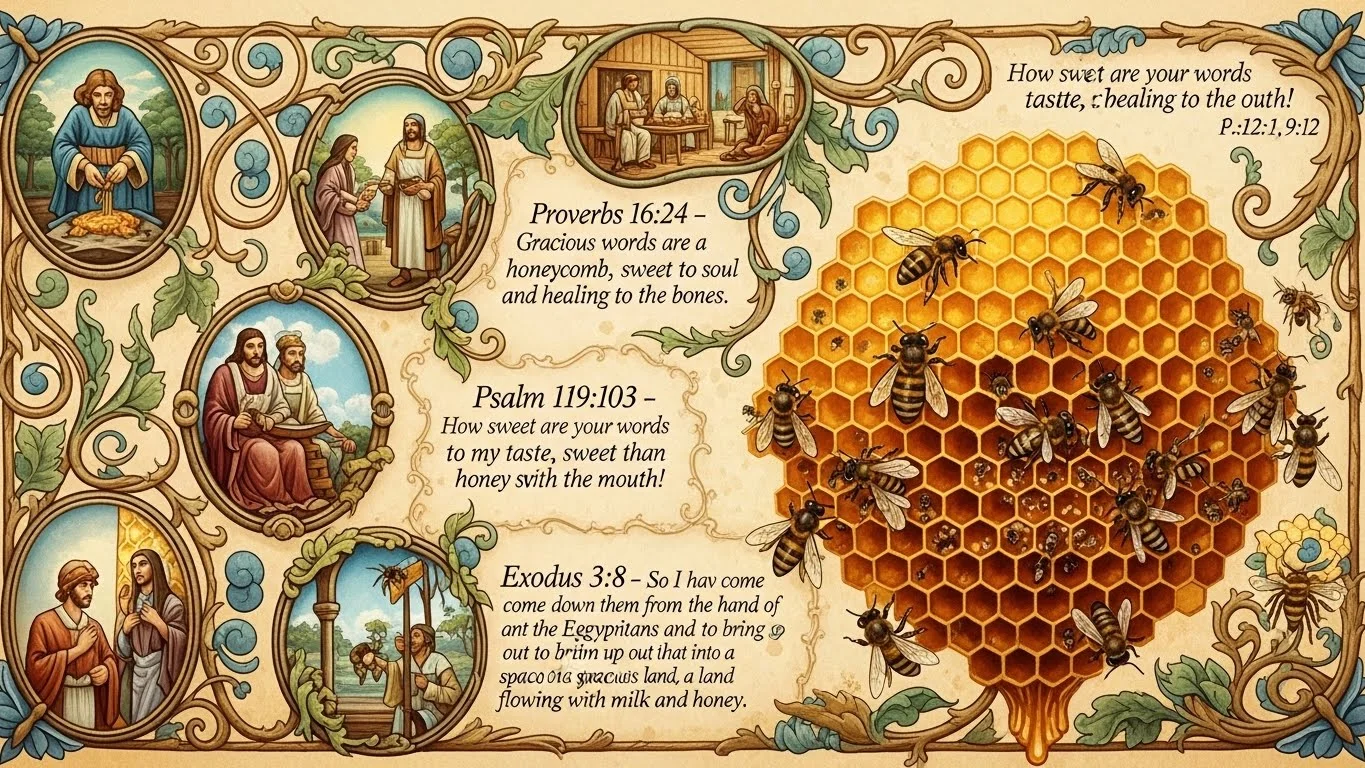
Psalm 119:103 (NIV)
“How sweet are your words to my taste, sweeter than honey to my mouth!”
Spiritual reflection and learning nourish the heart and mind like honey nourishes the body.
Proverbs 16:24 (NIV)
“Gracious words are a honeycomb, sweet to the soul and healing to the bones.”
Words have power; kind, gentle communication is as nourishing as honey.
Isaiah 7:15 (NIV)
“He will eat curds and honey when he knows enough to reject the wrong and choose the right.”
Honey represents growth, understanding, and making wise choices.
Psalm 81:16 (NIV)
“But you would be fed with the finest of wheat; with honey from the rock I would satisfy you.”
Honey symbolizes reward and satisfaction through careful guidance and effort.
Proverbs 25:16 (NIV)
“If you find honey, eat just enough—too much of it, and you will vomit.”
Moderation ensures the benefits of good things, like wisdom, are fully realized.
Judges 14:9 (NIV)
“He opened it and found a swarm of bees and some honey inside it.”
Unexpected rewards can come from effort and observation.
Proverbs 24:13-14 (NIV)
“Eat honey, my son, for it is good; honey from the comb is sweet to your taste.”
Wisdom, like honey, is sweet and rewarding when pursued carefully.
Exodus 16:31 (NIV)
“The Israelites called the bread manna. It was white like coriander seed and tasted like wafers made with honey.”
Honey symbolizes delight and sustenance, showing that diligence and care are rewarded.
Song of Solomon 4:11 (NIV)
“Your lips drop sweetness as the honeycomb, my bride; milk and honey are under your tongue.”
Represents the sweetness that arises from positive and nurturing relationships.
Psalm 19:10 (NIV)
“They are more precious than gold, than much pure gold; they are sweeter than honey, than honey from the comb.”
Wisdom, understanding, and kind deeds nourish the soul like honey nourishes the body.
Song of Solomon 5:1 (NIV)
“Eat, friends, and drink; drink your fill of love.”
Honey symbolizes enjoyment, reward, and sweetness in life.
Proverbs 16:24 (NIV)
“Gracious words are a honeycomb, sweet to the soul and healing to the bones.”
Kindness and gentle words nourish and heal, just as honey does physically.