Bible Verse About Gardens and Flowers
The Bible often uses gardens and flowers to show God’s beauty, care, and provision in creation. Gardens represent peace, life, and spiritual growth.
- “Consider the lilies of the field, how they grow…” (Matthew 6:28, KJV)
- “The flowers appear on the earth; the time of the singing of birds is come…” (Song of Solomon 2:12, KJV)
- “The earth is the Lord’s, and the fulness thereof.” (Psalm 24:1, KJV)
These verses show that nature reflects God’s glory and attention to detail.
God Is the Gardener Bible Verse
The Bible presents God as the caregiver and sustainer of His creation, like a gardener who tends a vineyard.
- “I am the vine, ye are the branches…” (John 15:5, KJV)
- “Every branch in me that beareth not fruit he taketh away…” (John 15:2, KJV)
- “My Father is the husbandman.” (John 15:1, KJV)
This shows that God actively nurtures, prunes, and helps believers grow spiritually.
Garden Verses Quotes (Biblical Themes)
Gardens in the Bible symbolize peace, growth, restoration, and God’s presence.
- “The Lord God planted a garden eastward in Eden…” (Genesis 2:8, KJV)
- “A garden enclosed is my sister, my spouse…” (Song of Solomon 4:12, KJV)
- “He shall be like a tree planted by the rivers of water…” (Psalm 1:3, KJV)
Garden imagery represents spiritual life and fruitfulness.
Bible Verses About Gardening (KJV)
Gardening in the Bible is often used as a symbol of spiritual work, growth, and fruit-bearing life.
- “And the Lord God took the man, and put him into the garden of Eden to dress it and to keep it.” (Genesis 2:15, KJV)
- “Whatsoever a man soweth, that shall he also reap.” (Galatians 6:7, KJV)
- “I have planted, Apollos watered; but God gave the increase.” (1 Corinthians 3:6, KJV)
These verses show that growth requires effort and God’s blessing.
What Are the 3 Gardens in the Bible
The Bible mentions three major symbolic gardens:
- Garden of Eden – The first garden where Adam and Eve lived (Genesis 2)
- Represents creation, innocence, and fellowship with God
- Gethsemane – The garden where Jesus prayed before His crucifixion (Matthew 26:36)
- Represents surrender, prayer, and obedience
- Garden Tomb (Garden of Resurrection) – Where Jesus was buried and resurrected (John 19:41)
- Represents victory over death and new life
These three gardens show the journey from creation to redemption.
Short Garden Verses Quotes
Here are short, beautiful Bible verses inspired by gardens and nature:
- “The flowers appear on the earth.” (Song of Solomon 2:12, KJV)
- “He maketh me to lie down in green pastures.” (Psalm 23:2, KJV)
- “I am the vine, ye are the branches.” (John 15:5, KJV)
- “The earth is the Lord’s.” (Psalm 24:1, KJV)
- “God saw every thing that he had made, and, behold, it was very good.” (Genesis 1:31, KJV)
These verses highlight peace, beauty, and God’s creation.
The Garden of Eden – Genesis 2:8 (NIV)
“Now the Lord God had planted a garden in the east, in Eden; and there he put the man he had formed.”
Gardens are places of beginning and care.
This verse encourages appreciation of creation and thoughtful stewardship of the environment.
Cultivating Life – Genesis 2:15 (NIV)
“The Lord God took the man and put him in the Garden of Eden to work it and take care of it.”
Gardens require nurturing and responsibility.
It reminds us to actively care for what is entrusted to us, whether nature or personal growth.
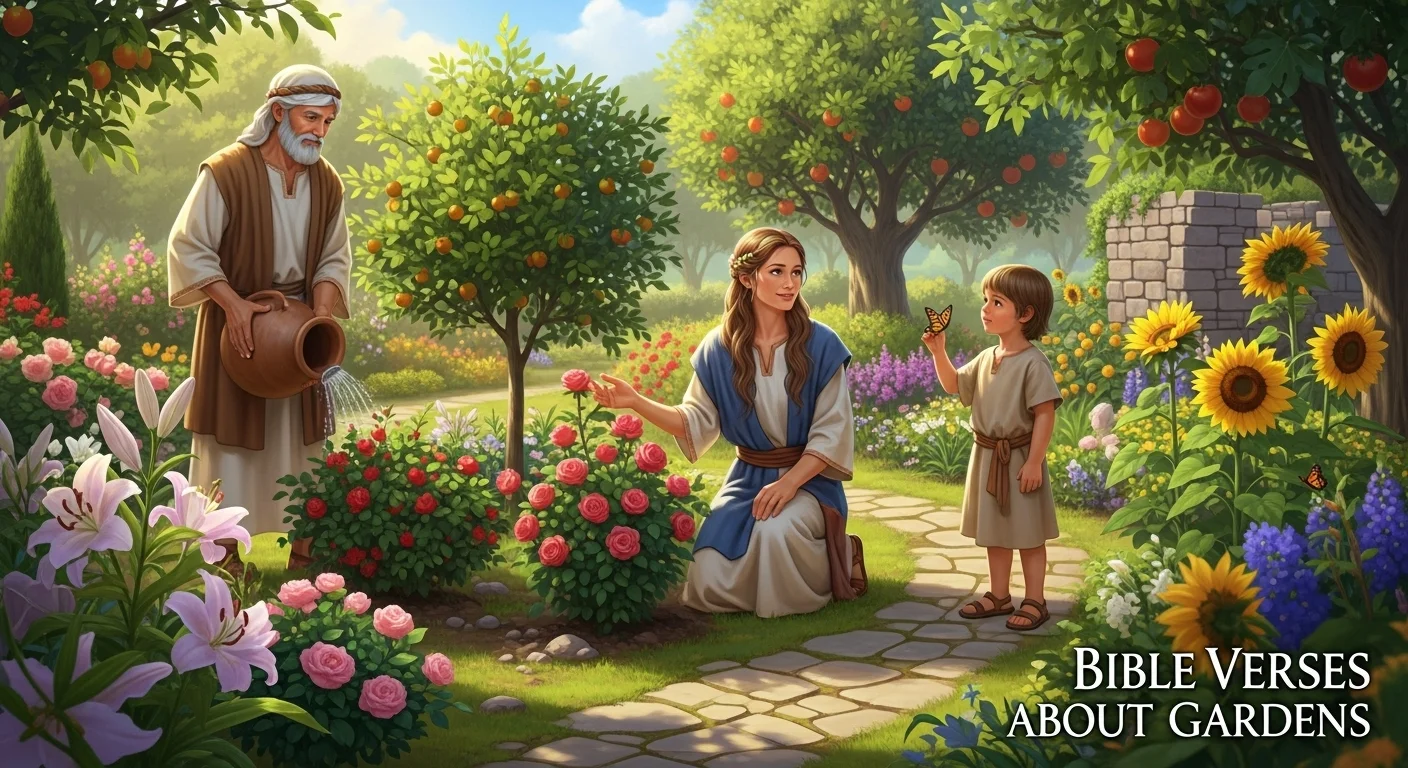
Peaceful Reflection – Song of Songs 4:12 (NIV)
“You are a garden locked up, my sister, my bride; you are a spring enclosed, a sealed fountain.”
Gardens symbolize safety and refreshment.
This verse encourages personal reflection and finding peace in sacred spaces.
Fruitfulness – John 15:1 (NIV)
“I am the true vine, and my Father is the gardener.”
Growth requires guidance and care.
This verse can inspire mindfulness about nurturing your own potential and relationships.
Patience and Growth – Isaiah 58:11 (NIV)
“The Lord will guide you always; he will satisfy your needs in a sun-scorched land and will strengthen your frame. You will be like a well-watered garden, like a spring whose waters never fail.”
Gardens remind us that consistent care leads to growth.
It encourages patience and trust in gradual, steady progress.
Beauty in Creation – Song of Songs 6:2 (NIV)
“My beloved is in his garden, tending his flowers.”
Gardens symbolize beauty and serenity.
This verse highlights the joy of appreciating and cultivating life around us.
Provision and Nourishment – Psalm 104:14 (NIV)
“He makes grass grow for the cattle, and plants for people to cultivate—bringing forth food from the earth.”
Gardens provide sustenance.
This verse reminds us to be grateful for nature’s abundance and provision.
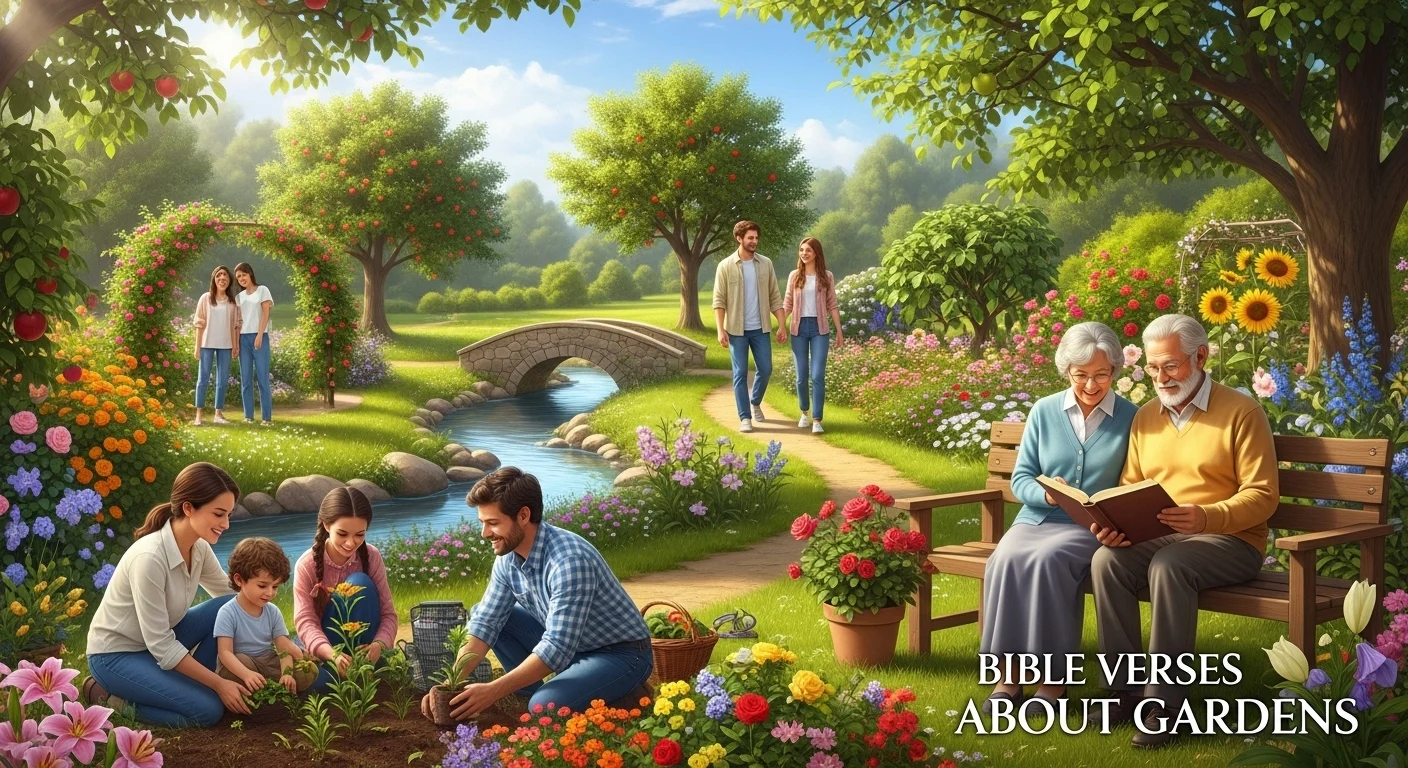
Spiritual Growth – Matthew 13:31-32 (NIV)
“The kingdom of heaven is like a mustard seed, which a man took and planted in his field. Though it is the smallest of all seeds, yet when it grows, it is the largest of garden plants…”
Small beginnings can produce great outcomes.
This verse encourages faith in gradual, meaningful growth.
Rest and Contemplation – Ecclesiastes 3:1-2 (NIV)
“There is a time for everything… a time to plant and a time to uproot.”
Gardens teach us about seasons and patience.
This verse inspires awareness of life’s cycles and timing in personal growth.
Tending with Care – Proverbs 24:27 (NIV)
“Put your outdoor work in order and get your fields ready; after that, build your house.”
Preparation and planning are essential.
It teaches the value of prioritization and thoughtful effort in life.
Joy in Labor – Isaiah 61:11 (NIV)
“For as the soil makes the sprout come up and a garden causes seeds to grow, so the Sovereign Lord will make righteousness and praise spring up before all nations.”
Gardens symbolize the rewards of consistent effort.
This verse inspires hope that careful work yields lasting results.
Restoration – Jeremiah 31:12 (NIV)
“They will come and shout for joy on the heights of Zion; they will rejoice in the bounty of the Lord—the grain, the new wine, and the olive oil, the young of the flocks and herds. They will be like a well-watered garden, and they will sorrow no more.”
Gardens represent healing and abundance.
This verse reminds us of restoration and joy after challenges.
Peaceful Environment – Genesis 13:10 (NIV)
“Lot looked around and saw that the whole plain of the Jordan was well watered, like the garden of the Lord…”
Gardens symbolize abundance and tranquility.
It encourages finding spaces that foster growth, reflection, and calmness.
Fruitful Living – Galatians 5:22-23 (NIV)
“But the fruit of the Spirit is love, joy, peace, forbearance, kindness, goodness, faithfulness, gentleness and self-control.”
Spiritual “gardens” yield positive fruits in life.
This verse encourages cultivating qualities that benefit yourself and others.
Enduring Patience – James 5:7 (NIV)
“Be patient, then, brothers and sisters, until the Lord’s coming. See how the farmer waits for the land to yield its valuable crop, patiently waiting for the autumn and spring rains.”
Gardens teach patience.
This verse reminds us that growth and results take time and consistent care.