Bible Verses on Reconciliation in Relationships
Reconciliation in relationships means restoring peace, trust, and understanding after conflict or separation. The Bible teaches that healthy relationships require humility, patience, love, and a willingness to forgive. Reconciliation does not always happen instantly, but it begins when people choose peace over bitterness and understanding over anger.
One of the central teachings of the Bible is that believers should seek harmony with others whenever possible.
“If it be possible, as much as lieth in you, live peaceably with all men.” — Romans 12:18
This verse encourages people to make sincere efforts toward peace and healing in their relationships. Whether the conflict involves marriage, friendship, or family, reconciliation starts with honesty, kindness, and forgiveness.
“Bearing with one another and forgiving one another.” — Colossians 3:13
The Bible reminds believers that forgiveness is an important step toward rebuilding broken relationships and strengthening emotional bonds.
Bible Verses About Reconciliation With One Another
Reconciliation with one another refers to restoring unity and peace between people after disagreements, misunderstandings, or hurt feelings. The Bible teaches that believers should avoid hatred, gossip, pride, and revenge because these things damage relationships and communities.
Jesus emphasized the importance of making peace with others before focusing on religious acts.
“First be reconciled to thy brother, and then come and offer thy gift.” — Matthew 5:24
This teaching highlights that relationships and peace among people matter deeply. Reconciliation often requires humility, listening, patience, and the courage to apologize when necessary.
“Be ye kind one to another, tenderhearted, forgiving one another.” — Ephesians 4:32
The Bible encourages people to show compassion and mercy so relationships can heal and grow stronger over time.
Bible Verses About Reconciliation With Family
Family reconciliation involves restoring love, trust, and communication among relatives after conflict or separation. The Bible strongly values family unity and teaches people to honor, support, and forgive one another within the home.
Disagreements between parents, children, siblings, or relatives can create emotional distance, but Scripture encourages peace and understanding.
“Above all these things put on charity, which is the bond of perfectness.” — Colossians 3:14
Love is presented as the force that holds families together during difficult times. Reconciliation in families often begins with gentle communication, patience, and a willingness to let go of resentment.
“A soft answer turneth away wrath.” — Proverbs 15:1
The Bible teaches that calm and respectful words can reduce anger and help repair damaged family relationships.
Bible Verses on Reconciliation and Forgiveness
Reconciliation and forgiveness are closely connected in the Bible. Forgiveness means letting go of bitterness and choosing mercy, while reconciliation focuses on restoring peace and rebuilding relationships. The Bible repeatedly teaches that forgiveness opens the door to healing and emotional freedom.
Jesus spoke about the importance of forgiving others sincerely.
“For if ye forgive men their trespasses, your heavenly Father will also forgive you.” — Matthew 6:14
This verse highlights the spiritual importance of mercy and compassion. Forgiveness does not always erase pain immediately, but it helps people move forward without hatred controlling their hearts.
“Be kind and compassionate to one another, forgiving each other.” — Ephesians 4:32
The Bible encourages believers to practice forgiveness with humility and kindness so reconciliation can become possible.
Bible Verses About Reconciliation With Friends
Friendship reconciliation means restoring trust, respect, and understanding after arguments, misunderstandings, or emotional distance between friends. The Bible teaches that true friendship is built on loyalty, honesty, patience, and forgiveness.
Even strong friendships can face challenges, but Scripture encourages people to seek peace rather than allow anger to destroy valuable relationships.
“A friend loveth at all times.” — Proverbs 17:17
This verse reminds believers that genuine friendship remains caring and supportive even during difficult moments. Reconciliation with friends often requires honest communication and the willingness to forgive mistakes.
“Blessed are the peacemakers.” — Matthew 5:9
The Bible praises those who work toward peace and unity instead of division and conflict.
Bible Verses About Reconciliation With God
Reconciliation with God refers to restoring a close spiritual relationship with Him through faith, repentance, prayer, and obedience. The Bible teaches that God is merciful and welcomes those who sincerely seek Him with humility and faith.
According to Scripture, reconciliation with God brings peace, hope, and spiritual renewal.
“And all things are of God, who hath reconciled us to himself.” — 2 Corinthians 5:18
The Bible describes God as loving, forgiving, and ready to guide people toward righteousness. Turning toward God involves sincere repentance, prayer, and a desire to live according to His teachings.
“Draw nigh to God, and he will draw nigh to you.” — James 4:8
This verse encourages believers to seek closeness with God through faith and devotion, trusting in His mercy and guidance.
Forgiveness Leads to Peace
“Be kind and compassionate to one another, forgiving each other, just as in Christ God forgave you.” — Ephesians 4:32
Forgiveness is central to reconciliation.
Extending mercy promotes peace and restores broken relationships.
Making Amends
“Therefore, if you are offering your gift at the altar and there remember that your brother or sister has something against you, leave your gift there in front of the altar. First go and be reconciled to them; then come and offer your gift.” — Matthew 5:23-24
Reconciliation requires taking action and making amends.
Resolving conflict restores trust and spiritual harmony.
Love Covers All Wrongs
“Above all, love each other deeply, because love covers over a multitude of sins.” — 1 Peter 4:8
Love is the foundation of reconciliation.
Deep compassion fosters forgiveness and healing.
Peace Through God
“Make every effort to live in peace with everyone and to be holy; without holiness no one will see the Lord.” — Hebrews 12:14
Reconciliation promotes peace and spiritual well-being.
Living in harmony with others strengthens personal faith and relationships.

God Reconciles Us
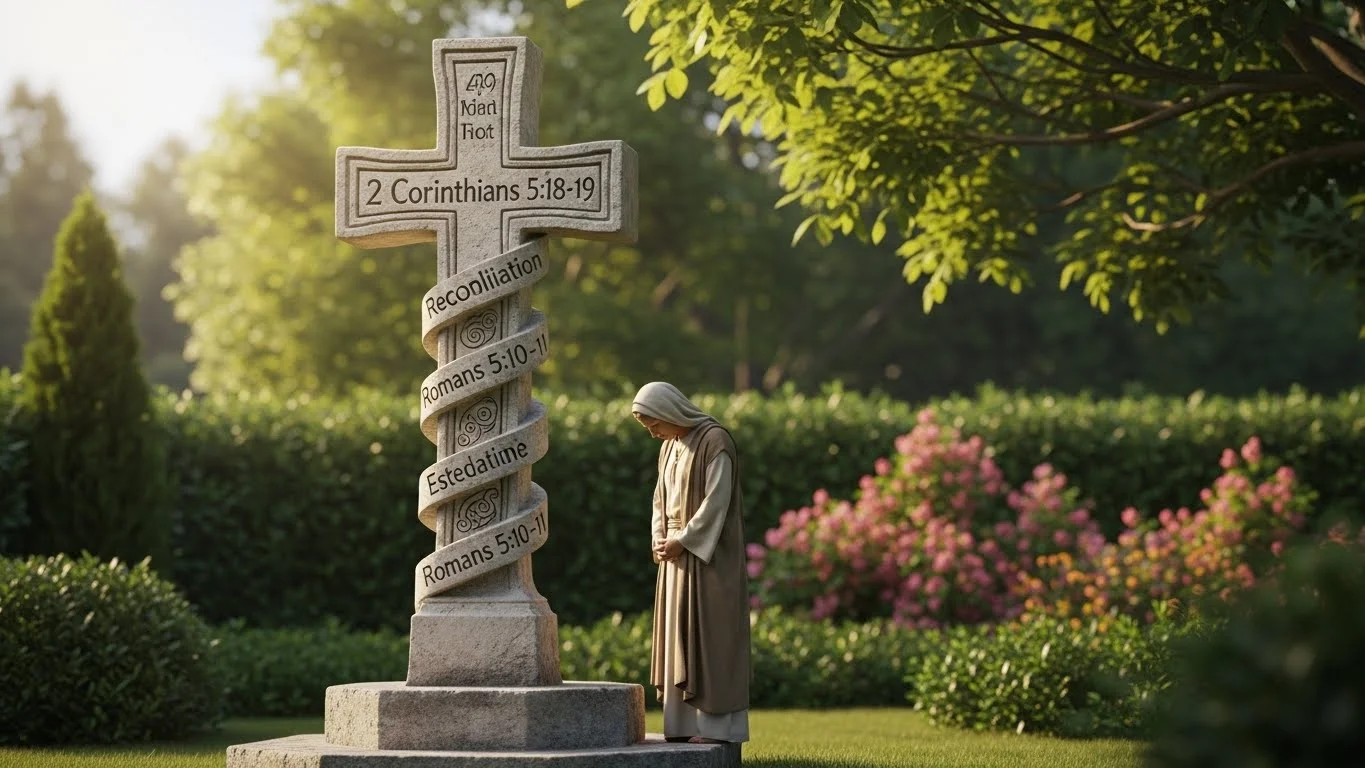
“All this is from God, who reconciled us to himself through Christ and gave us the ministry of reconciliation.” — 2 Corinthians 5:18
Reconciliation originates with God.
Understanding God’s forgiveness enables us to reconcile with others.
Restoring Relationships
“Blessed are the peacemakers, for they will be called children of God.” — Matthew 5:9
Peacemakers actively restore relationships and resolve conflict.
Promoting harmony reflects godly character and fosters unity.
Mutual Forgiveness
“Bear with each other and forgive one another if any of you has a grievance against someone. Forgive as the Lord forgave you.” — Colossians 3:13
Forgiveness is mutual and essential in reconciliation.
Letting go of grudges encourages healthy, lasting relationships.
Humility in Reconciliation
“Do not let the sun go down while you are still angry.” — Ephesians 4:26
Addressing conflict quickly requires humility and openness.
Timely resolution prevents bitterness and restores peace.
God’s Mercy
“The Lord is compassionate and gracious, slow to anger, abounding in love.” — Psalm 103:8
God’s mercy guides our reconciliation efforts.
Embracing compassion fosters understanding and forgiveness.
Bringing Harmony
“If it is possible, as far as it depends on you, live at peace with everyone.” — Romans 12:18
Reconciliation requires effort and intentionality.
Choosing peace strengthens relationships and promotes harmony.
Restoring Trust
“Forgive your brother or sister from your heart.” — Matthew 18:35
Sincere forgiveness rebuilds trust.
Letting go of resentment allows relationships to flourish.

God’s Plan for Reconciliation
“For God was pleased to have all his fullness dwell in him, and through him to reconcile to himself all things.” — Colossians 1:19-20
Reconciliation aligns with God’s purpose.
It restores harmony between humanity and the Creator.
Peace in Conflict
“Bless those who persecute you; bless and do not curse.” — Romans 12:14
Reconciliation involves responding with grace, even toward adversaries.
Blessing others nurtures peace and goodwill.
Restoration Through Forgiveness
“Forgive, and you will be forgiven.” — Luke 6:37
Forgiveness is reciprocal and restorative.
Offering mercy allows personal and relational healing.
Pursuing Peace
“Turn from evil and do good; seek peace and pursue it.” — Psalm 34:14
Actively seeking peace leads to reconciliation.
Positive efforts restore broken relationships and encourage harmony.
Love in Action
“Do everything in love.” — 1 Corinthians 16:14
Reconciliation is an expression of love.
Choosing love over pride enables forgiveness and restoration.
Restoring Community
“Carry each other’s burdens, and in this way you will fulfill the law of Christ.” — Galatians 6:2
Helping one another strengthens reconciliation.
Shared support fosters unity and mutual care.
Seeking Forgiveness
“Confess your sins to each other and pray for each other so that you may be healed.” — James 5:16
Acknowledgment of wrongdoing promotes reconciliation.
Honest confession restores relationships and encourages healing.
Godly Reconciliation
“Do not repay anyone evil for evil… if it is possible, as far as it depends on you, live at peace with everyone.” — Romans 12:17-18
Reconciliation involves restraint and patience.
Responding with grace fosters long-term harmony.
Renewing Relationships
“Therefore, if anyone is in Christ, the new creation has come: The old has gone, the new is here!” — 2 Corinthians 5:17
Reconciliation brings new beginnings.
Faith-inspired renewal restores broken relationships and personal growth.