Exodus
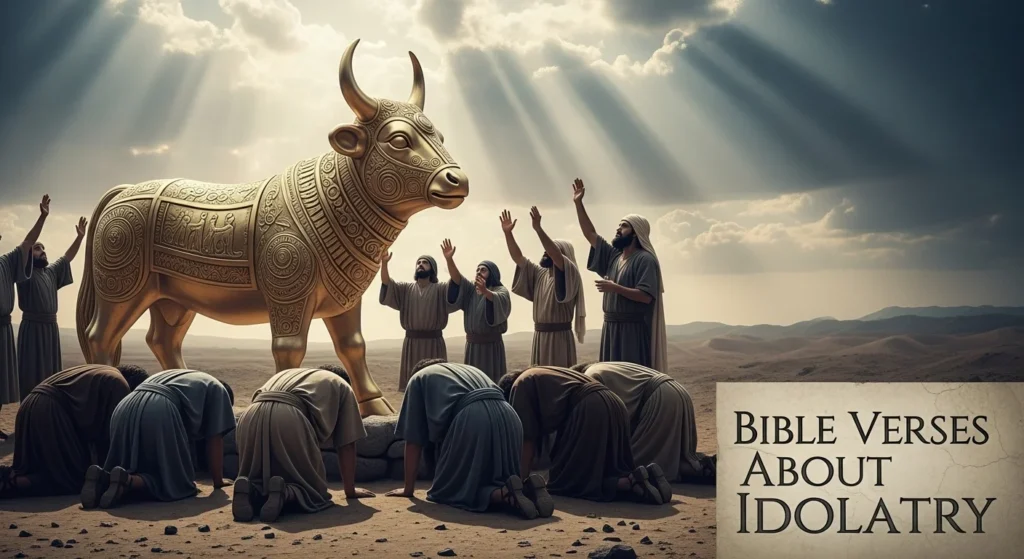
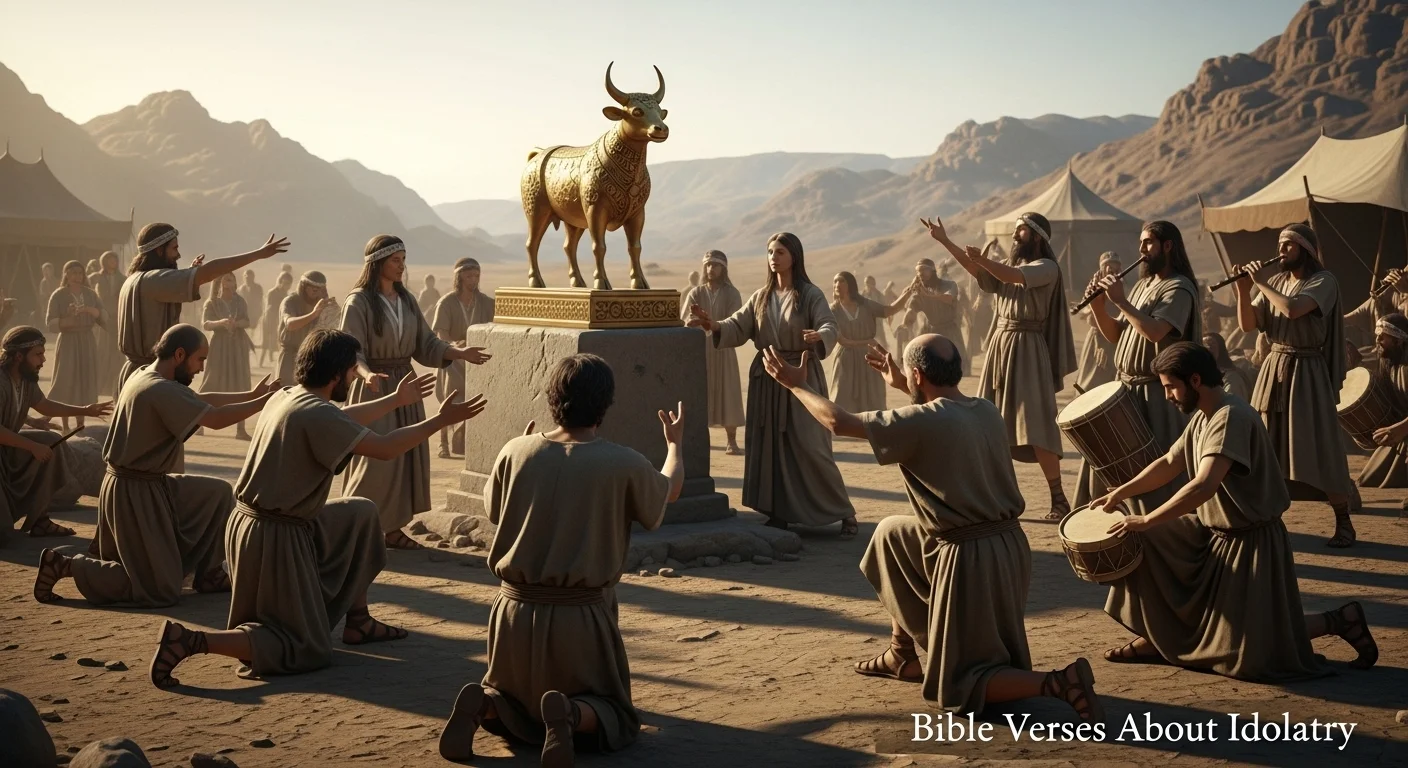
“You shall have no other gods before me. You shall not make for yourself an image in the form of anything in heaven above or on the earth beneath or in the waters below. You shall not bow down to them or worship them; for I, the Lord your God, am a jealous God.” (Exodus 20:3-5, NIV)
Explanation: This foundational command prohibits the worship of anything other than the Divine. It covers both physical images (idols) and the placement of any created being (including man) or worldly object in a position of ultimate reverence or priority.
Isaiah
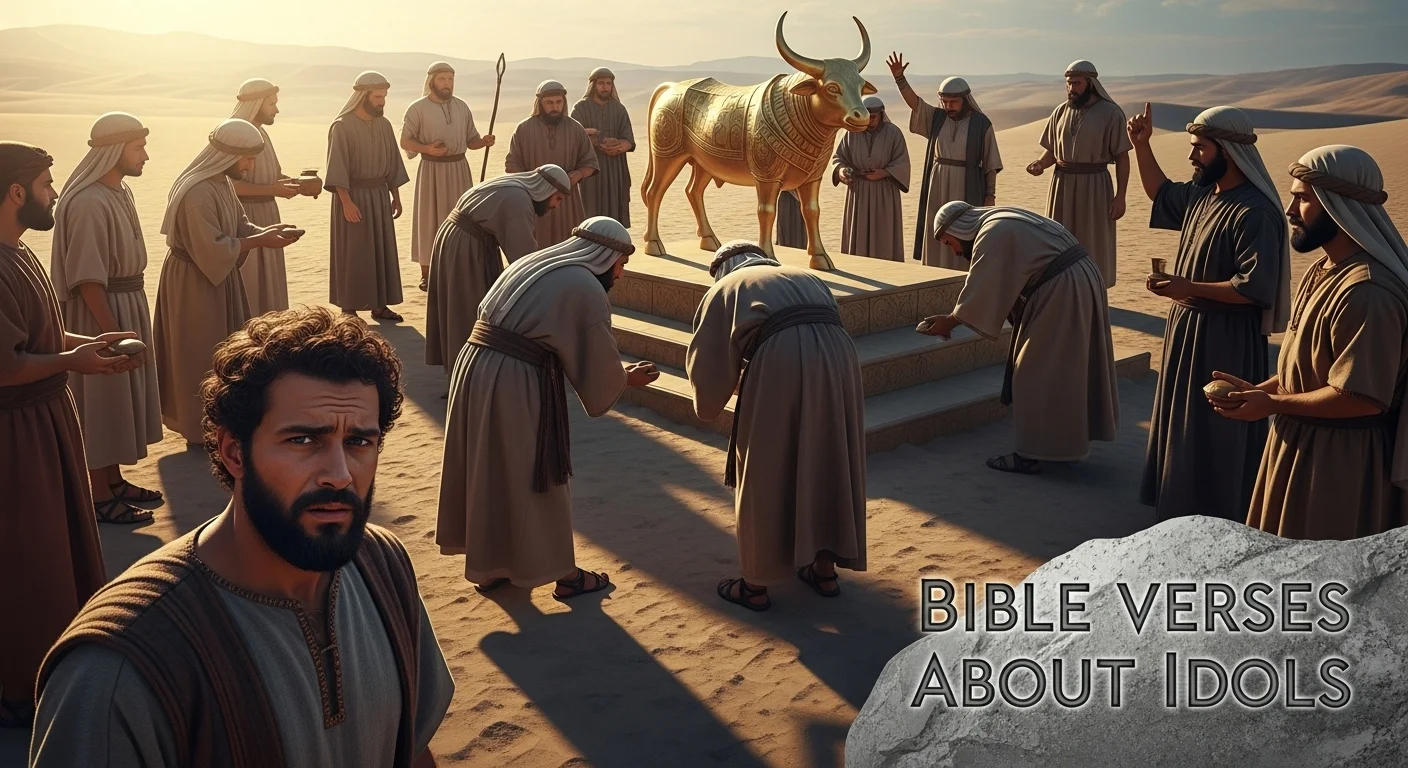
“I am the Lord; that is my name! I will not yield my glory to another or my praise to idols.” (Isaiah 42:8, NIV)
Explanation: This declaration asserts the absolute uniqueness and sovereignty of the Divine. It states explicitly that reverence and ultimate praise belong to the Creator alone and will not be shared with any idol, human creation, or mortal person.
“Stop trusting in mere humans, who have but a breath in their nostrils. Why hold them in esteem?” (Isaiah 2:22, NIV)
Explanation: This instruction warns against placing faith, ultimate reliance, or excessive esteem in mortal human beings, whose lives are fleeting and temporary. It advocates for putting absolute trust only in an eternal, infallible source.
Acts
“We are only human, like you. We are bringing you good news, telling you to turn from these worthless things to the living God, who made the heavens and the earth and the sea and everything in them.” (Acts 14:15, NIV)
Explanation: This verse provides a model of humility from spiritual leaders (Paul and Barnabas), who redirect worship and attention away from themselves and toward the Creator. It emphasizes that human beings are fundamentally flawed and unworthy of worship.
Romans
“They exchanged the truth about God for a lie, and worshiped and served created things rather than the Creator—who is forever praised. Amen.” (Romans 1:25, NIV)
Explanation: This pinpoints the essence of idolatry: giving worship, service, and loyalty to created things (which includes other humans, human ideologies, or possessions) instead of the Eternal Creator.
Deuteronomy
“The Lord your God you shall fear, and him you shall serve, and by his name you shall swear.” (Deuteronomy 6:13, NIV)
Explanation: This verse demands exclusive awe (fear) and service directed only toward the Divine. It establishes a singular focus for allegiance and ultimate loyalty, leaving no room for serving man or false powers.
Jeremiah
“The heart is deceitful above all things and beyond cure. Who can understand it?” (Jeremiah 17:9, NIV)
Explanation: This caution about the inherent flaws and unreliability of the human heart underscores the danger of placing ultimate faith in the wisdom, reliability, or goodness of any human being.
Psalm
“Some trust in chariots and some in horses, but we trust in the name of the Lord our God.” (Psalm 20:7, NIV)
Explanation: This contrasts reliance on temporary human or worldly power (e.g., political systems, military strength, or wealth) with the true source of trust in the Eternal, establishing an exclusive source of ultimate reliance.
Matthew
“Away from me, Satan! For it is written: ‘Worship the Lord your God, and serve only him.’” (Matthew 4:10, NIV)
Explanation: This powerful quote emphasizes the singular, exclusive nature of worship and service, firmly rejecting the temptation to give such ultimate devotion to any other power, being, or figure (including Satan’s offer of world kingdoms).
Revelation
“When I heard and saw them, I fell down to worship at the feet of the angel who had been showing them to me. But he said to me, ‘Don’t do that! I am a fellow servant with you… Worship God!’ ” (Revelation 22:8-9, NIV)
Explanation: This provides a clear instruction from a powerful, spiritual being (an angel), who explicitly refuses worship and redirects the focus back to the Divine. It serves as a strong warning against the veneration of even powerful spiritual or religious leaders.
Other Verses on Exclusive Worship and Idolatry
1 Corinthians
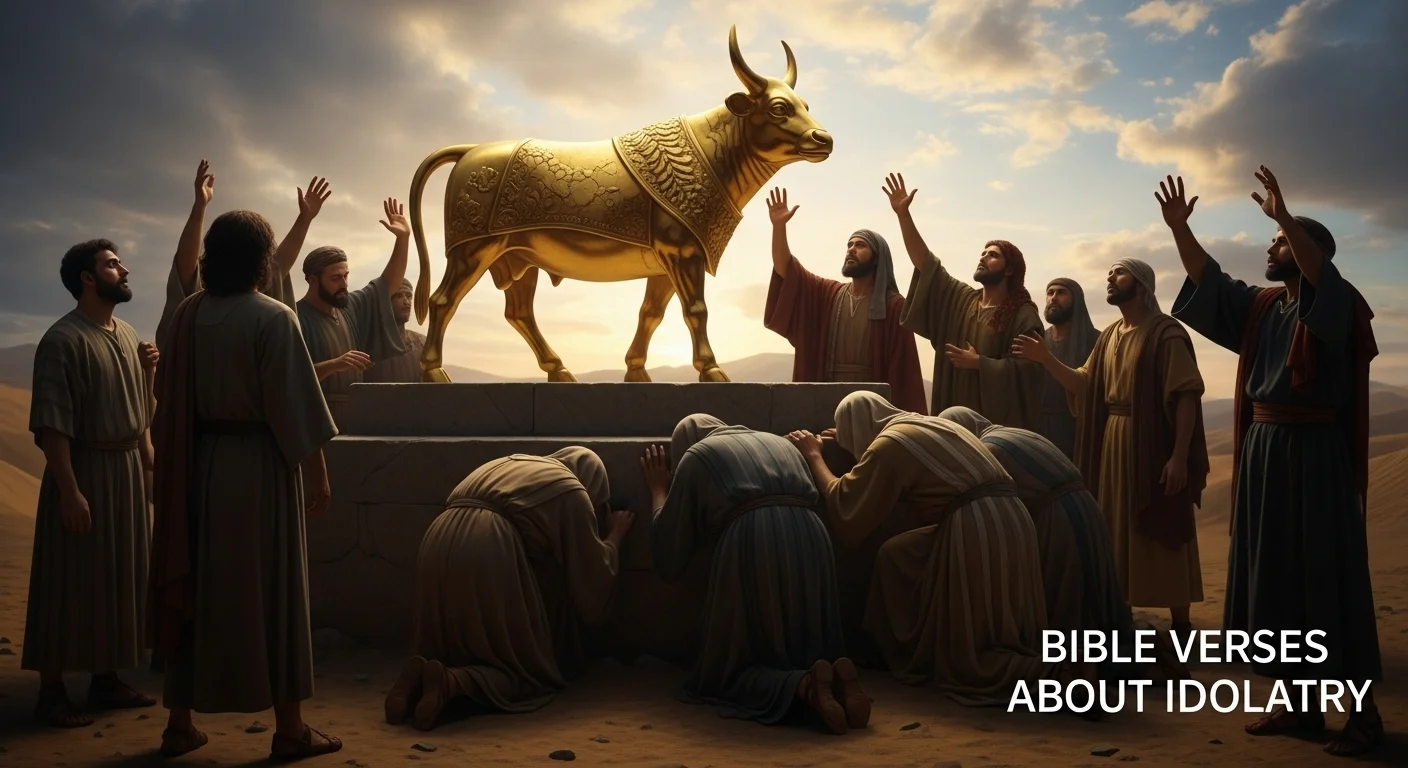
“There is no God but one. For even if there are so-called gods, whether in heaven or on earth (as indeed there are many ‘gods’ and many ‘lords’), yet for us there is but one God, the Father, from whom all things came and for whom we live; and there is but one Lord, Jesus Christ, through whom all things came and through whom we live.” (1 Corinthians 8:4-6, NIV)
Explanation: This passage firmly asserts monotheism, confirming that despite the existence of many so-called gods or “lords” (human authorities, deities), there is ultimately only one true Creator deserving of worship.
Psalm
“May all who worship idols be put to shame, those who boast in idols. Worship him, all you gods!” (Psalm 97:7, NIV)
Explanation: This is a call for shame upon those who place their boast or trust in created, non-Divine objects. It is a command for all beings to redirect their worship to the Creator.
Hebrews
“Keep your lives free from the love of money and be content with what you have, because God has said, ‘Never will I leave you; never will I forsake you.’ ” (A warning against the ‘idol’ of wealth.) (Hebrews 13:5, NIV)
Explanation: This warns against making money or possessions an idol by placing ultimate emotional dependence and trust in them instead of the eternal provision and presence of the Divine.
Colossians
“Put to death, therefore, whatever belongs to your earthly nature: sexual immorality, impurity, passion, evil desire and greed, which is idolatry.” (Defining greed as a form of idolatry.) (Colossians 3:5, NIV)
Explanation: This broadens the definition of idolatry beyond physical objects to include internal vices, specifically identifying greed (excessive desire for possessions or status) as a form of misplaced worship.
1 John
“Dear children, keep yourselves from idols.” (1 John 5:21, NIV)
Explanation: This serves as a simple, final, comprehensive warning to maintain an exclusive spiritual focus, avoiding anything that might draw primary devotion away from the Divine.
Psalm
“Some boast in their chariots and some in their horses, but we boast in the name of the Lord our God.” (Psalm 20:7, NIV)
Explanation: This repeats the contrast between trusting human/military might (chariots/horses) and placing one’s ultimate confidence and boast in the Divine alone.
Isaiah
“Look to me and be saved, all you ends of the earth; for I am God, and there is no other.” (Isaiah 45:22, NIV)
Explanation: This is a universal call to look to the Creator alone for ultimate salvation and deliverance, emphasizing the Divine’s singular, unmatched status.
Hosea
“For I desire mercy, not sacrifice, and acknowledgment of God rather than burnt offerings.” (Prioritizing genuine relationship over ritual.) (Hosea 6:6, NIV)
Explanation: This prioritizes true relationship, mercy, and genuine acknowledgment of the Divine’s nature over empty religious ritual, sacrifice, or outward show—which can become an idol in itself.
1 Samuel
“But Samuel replied: ‘Does the Lord delight in burnt offerings and sacrifices as much as in obeying the Lord? To obey is better than sacrifice, and to heed is better than the fat of rams. For rebellion is like the sin of divination, and arrogance like the evil of idolatry.’ ” (Linking arrogance/rebellion to idolatry.) (1 Samuel 15:22-23, NIV)
Explanation: This passage links arrogance and rebellion (human self-will) to the “evil of idolatry,” suggesting that human insistence on one’s own way over divine instruction is a fundamental act of displaced allegiance.
2 Corinthians
“What agreement is there between the temple of God and idols? For we are the temple of the living God.” (2 Corinthians 6:16, NIV)
Explanation: This rhetorical question emphasizes the incompatibility between ultimate devotion to the Divine and the simultaneous worship of idols (or human figures), stressing the need for spiritual purity.
Psalm
“Their idols are silver and gold, made by human hands.” (Psalm 115:4, NIV)
Explanation: This highlights the profound irony and folly of idolatry: the object of worship is often a temporary artifact created by the very human hands that are bowing down to it.
1 Thessalonians
“You turned to God from idols to serve the living and true God.” (1 Thessalonians 1:9, NIV)
Explanation: This celebrates the decisive turning away from false worship to embrace the exclusive service of the one true Divine power.
Habakkuk
“The whole earth is filled with the knowledge of the glory of the Lord, as the waters cover the sea.” (Habakkuk 2:14, NIV)
Explanation: This foresees a future where the majesty and glory of the Divine are universally recognized, leaving no space for the false claims of idols or human figures.
Jeremiah
“Among the gods there is none like you, Lord; no deeds can compare with yours.” (Jeremiah 10:6, NIV)
Explanation: This verse declares the utter incomparable nature of the Divine, establishing the Creator’s singular status as the only being worthy of ultimate worship and praise.